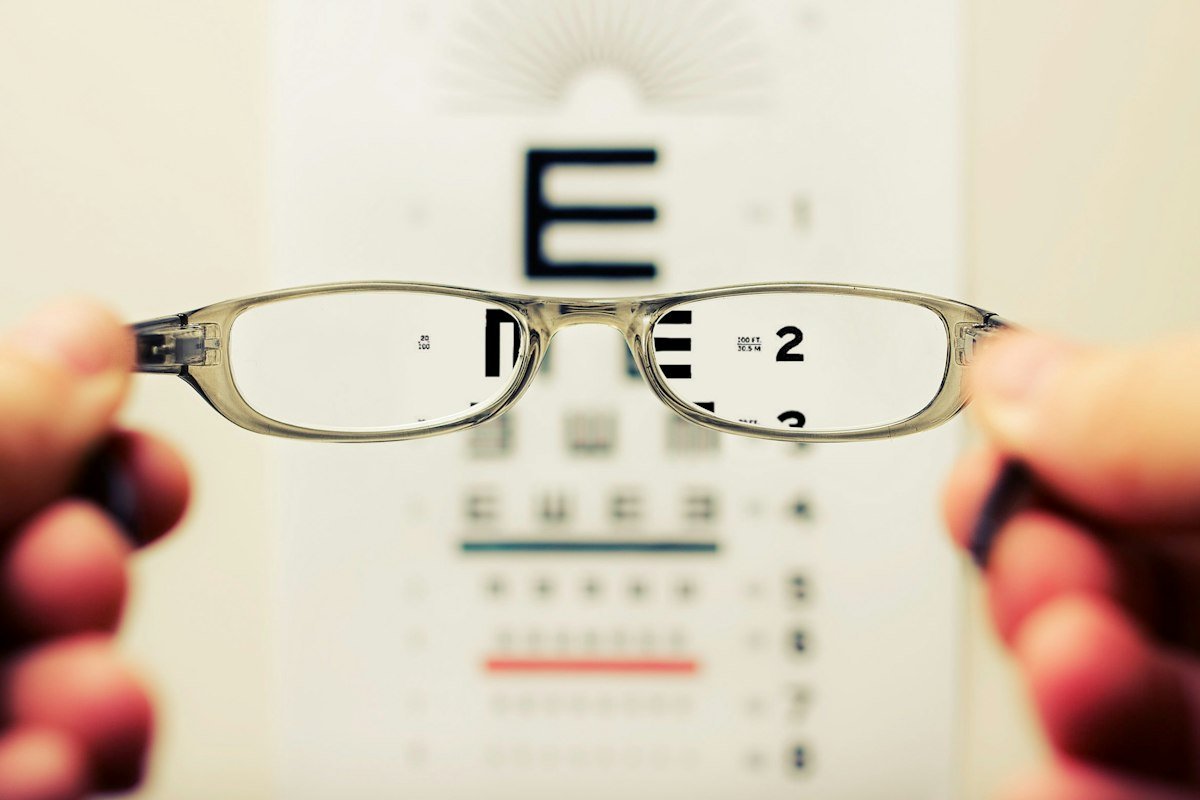
The menu is suddenly too small. Headlights at night look like starbursts. Your eyes feel tired by lunchtime. Is it just age, or something your eye doctor should see?
Most blur that creeps in slowly after 50 has a simple cause, like aging focus, dry eye or early cataracts. A few kinds of blur are emergencies. Below: the 8 most common causes, a quick table to match what you feel, the warning signs that can’t wait, and what actually helps your eyes.
- Most common: presbyopia (aging focus), dry eye and screen strain. All are easy to treat.
- Slow and silent: cataracts, macular degeneration (AMD), glaucoma and diabetes can blur vision; regular dilated eye exams catch them early.
- Emergency signs: a curtain over your vision, a burst of new floaters or flashes, sudden blur with eye pain, or blur with face drooping or weakness.
- What helps: a dilated exam every 1 to 2 years after 50, UV sunglasses, no smoking, good blood sugar and leafy greens.
- Eye supplements help one group: people who already have intermediate AMD.
First: when blurry vision is an emergency
- a curtain or shadow over part of your vision, new flashes or a shower of new floaters (possible retinal detachment)
- eye pain, a red eye, headache or nausea (possible acute glaucoma)
- weakness, numbness, trouble speaking or a drooping face (possible stroke: call 911)
- straight lines that suddenly look wavy
The 8 most common causes of blurry vision after 50
Presbyopia (aging focus)
After about 40, the lens inside the eye gets stiffer. Small print and phone screens blur up close, while far vision stays fine. Reading glasses or a new prescription usually fix it.
Dry eye
Blur that comes and goes, gets better when you blink, and feels gritty or burning. Very common after 50, made worse by screens, heating, fans and some medicines.
Screen eye strain
Tired eyes and blur after long reading or screen time, because we blink less while staring. Use the 20-20-20 rule: every 20 minutes, look about 20 feet away for 20 seconds.
Cataracts
Slow, cloudy or foggy vision, glare and halos from headlights, colors that look faded. Very common with age and fixed with a routine surgery when it starts to limit daily life.
Age-related macular degeneration (AMD)
Blur or a dark spot in the center of your vision, and straight lines that look wavy. Early AMD often has no symptoms, which is why dilated eye exams matter after 50.
Diabetes and blood sugar
High or swinging blood sugar can blur vision for days. Over years, diabetes can damage the retina (diabetic retinopathy). People with diabetes need a dilated eye exam every year.
Glaucoma
The common type has no early symptoms and slowly takes side vision. A rare type comes on suddenly with eye pain, headache and nausea: that’s an emergency.
Medicines
Some allergy, bladder, blood pressure, mood and steroid medicines can blur vision or dry the eyes. Ask your pharmacist before you stop anything.
Quick table: what the blur feels like
| What you notice | Often linked to | What to do |
|---|---|---|
| Small print blurry up close | Presbyopia | Eye exam, reading glasses |
| Blur that clears when you blink | Dry eye, screen strain | Breaks, eye drops; exam if it lasts |
| Foggy vision and headlight glare | Cataracts | Eye exam |
| Blur or dark spot in the center, wavy lines | AMD | Eye exam soon; sudden change: same day |
| Losing side vision | Glaucoma | Eye exam soon |
| Blur that changes from day to day | Blood sugar swings, dry eye | Check blood sugar; eye exam |
| Sudden curtain, flashes, many new floaters | Retinal detachment | Emergency eye care now |
What actually helps your eyes after 50
Get a dilated eye exam
Every 1 to 2 years after 50, and every year if you have diabetes. Many eye diseases are painless until they’re advanced.
Wear UV-blocking sunglasses and a hat
Sunlight over many years is linked to cataracts. Look for 100% UV protection on the label.
Don’t smoke
Smoking raises the risk of both cataracts and AMD.
Keep blood sugar and blood pressure in range
Both protect the tiny blood vessels in the retina.
Eat leafy greens and colorful vegetables
Spinach, kale and collards are rich in lutein and zeaxanthin, the yellow pigments of the macula. See our lutein and zeaxanthin guide for amounts.
Help dry eyes
Blink often at screens, use preservative-free artificial tears, a humidifier in winter and keep fans and vents away from your face.

Do eye supplements help?
For one group, yes: people who already have intermediate AMD, or advanced AMD in one eye. In the large AREDS studies run by the National Eye Institute, a specific vitamin and mineral formula lowered their risk of the disease getting worse by about 25%. For people without AMD, the studies found no benefit, and the formulas did not prevent cataracts.
Many newer eye supplements use similar nutrients but don’t show all the doses. Before you buy one, compare its label with the amounts used in the studies. The ones our readers ask about most:

If you take a blood thinner, ask your doctor before trying formulas with ginkgo or high-dose vitamin E.
Questions readers ask
Is blurry vision after 50 normal?
Some changes are normal. Most people need reading glasses after 40 to 45 because the lens stiffens (presbyopia). But new blur can also come from dry eye, cataracts, AMD, glaucoma or diabetes, so get a dilated eye exam if your vision changes.
When is blurry vision an emergency?
Get help the same day if blur comes on suddenly, or comes with a curtain or shadow over your vision, new flashes or many new floaters, eye pain with headache or nausea, or face drooping, weakness or trouble speaking. Call 911 for possible stroke signs.
Why is my vision blurry in the morning?
Dry eye is the most common reason, especially if blinking clears the blur. Sleeping with a fan on or with eyelids not fully closed can make it worse. If it lasts all day, see an eye doctor.
Can high blood sugar cause blurry vision?
Yes. High or swinging blood sugar can change the shape of the lens and blur vision for days. Over years, diabetes can damage the retina, so people with diabetes need a dilated eye exam every year.
How often should I get an eye exam after 50?
Most adults over 50 should have a dilated eye exam every 1 to 2 years, and every year with diabetes or a family history of glaucoma, or as your eye doctor recommends.
Do eye vitamins help blurry vision?
They do not fix blur from presbyopia, dry eye or cataracts. The AREDS formulas lowered the risk of AMD getting worse by about 25% in people who already had intermediate AMD, but showed no benefit for people without AMD.
This article is general information, not medical advice. Some links lead to our independent reviews, which contain affiliate links; we may earn a commission at no extra cost to you. Talk to your doctor before starting any new supplement.